Motivation
Why would you run a Research Dugnad?
What is a dugnad?
‘Dugnad’ is a Norwegian word meaning voluntary collective work, for example, shared housing residents coming together to work on shared garden space, or young school children tidying and decorating their classroom. In 2004 it was voted Norwegian word of the year, and in 2020 was used to encourage the people of Norway to come together as a community to fight the pandemic. A dugnad typically involves coming together as a group to share chores, but is also a fun and sociable occasion. They are sometimes followed by a meal where everyone brings some dishes to share.
Modern research is a collaborative effort. Researchers in an institution form groups studying similar topics or all working under the same Principal Investigator, meet with colleagues from nearby institutions for seminars and conferences, and participate in global collaborations with late night telecons reaching hundreds of people. There are many tools facilitating and encouraging active communication between huge remote collaborations, but here we focus on smaller local scale collaboration: just one research group.
The core idea of a Research Dugnad is to take a day out of the hectic schedule of research, teaching and admin to come together as a group (physically or virtually; see The Turing Way’s Guide for Collaboration) and perform tasks that benefit the group as a whole, share skills and have some fun. This goes beyond a regular group meeting where people might present their own work, ask for advice or share a paper they read and involves much more active input from everyone. We have prepared a list of tasks (link to example taksks list) that might be useful to any research group and should enable everyone in the group to contribute something, but the agenda for the day should be carefully planned to match your group’s needs, skills, and location.
Why should I care about …
…group admin?
A PI is generally very busy with research, teaching, University committees, conferences, etc. but is also the point of contact for the Group when the University wants to advertise to new students and wants a shiny picture for their brochure, or a keen undergrad looking for a PhD wants to ask if there are projects available. These tasks don’t involve lots of skill, just some time and knowledge of what the group as a whole is working towards, so can be delegated to more junior members of the team to save the PI time.
A Research Dugnad is the perfect opportunity to review what your group’s mission is, what funding do you have or will apply for in the future, and how everyone’s individual work contributes to the goals. A 2014 study showed that people worked harder, longer and better when they had social cues telling them that their individual task was contributing to a team goal, rather than being an isolated unit.
…software development and sustainability?
A 2014 survey of 15 UK Universities across a range of diciplines (not just sciences!) by the Software Sustainability Institute found that 92% of respondents used research-specific software regularly and 70% said their job would be impossible without it. Most have written their own software but many have never received formal training on coding or software skills and are rarely credited for their work, either in publications or promotion.
This leads us to a crisis in the core of scientific research: reproducibility. A 2016 article published in Nature Methods looked at the software used in ~3900 published papers in the field of genomics and found that 67% of them were using outdated software and missing huge amounts information in their analysis.
This picture is slowly changing as funders realise the value in supporting software development as a fundamental process in research, but some of these problems can be solved on a smaller scale. The SSI survey found that use and knowledge of research software decreases with seniority, so more junior members of the group may hold valuable skills that can be shared.
Encouraging collaboration and resource sharing among the group would also significantly speed up the initiation of new group members, be they PhD students who have never coded before writing error-prone statistical analysis scripts, postdocs moving fields who lack some background knowledge of what parameters are best used for observing runs, experienced coders trying to maintain, document and optimise huge packages that are used worldwide with little support, or even the PI who has used the same libraries since their PhD before the invention of the internet and doesn’t know what GitHub is. Everyone in the group can benefit from an extra pair of eyes to hunt down a bug, or a tip on a new plotting package that makes your presentation stand out at a conference. A Research Dugnad gives you space to share skills, work together and back up code and data in a place everyone can access, so no one needs to reinvent the wheel.
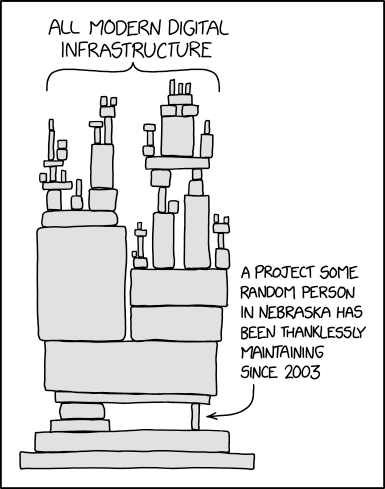
(Something about short term contracts and lost work)
…fun/social stuff?
A meta-study of team building and motivation research found that yes, team building activities do actually work. Sort of…
Getting a group of strangers together and asking them awkward personal questions is never a way to make people comfortable. If you invite your colleagues to a ‘team building day’ most people will groan, hide or try to find excuses not to come. However, activities that offered people the chance to get to know each other naturally in a low pressure environment, such as shared meals, trips to the museum or sports (so long as the boss isn’t too good at it) do have measurable impact on a groups performance at work.
One of the top 5 team building activities that have been shown to consistenly benefit rather than embarrass a group is shared learning. A Research Dugnad can have structured learning elements such as a prepared presentation on a new technique, or more casual learning activities like competitive code challenges (link to list of activities). A group leader of an oncology group in Germany even found that playing online escape room style game with their group during the lockdown helped them learn how to admit mistakes in the lab and learn from them rather than feeling embarrased and hiding their flaws.
…doing this at all?
(Add testimonies from tester groups)